
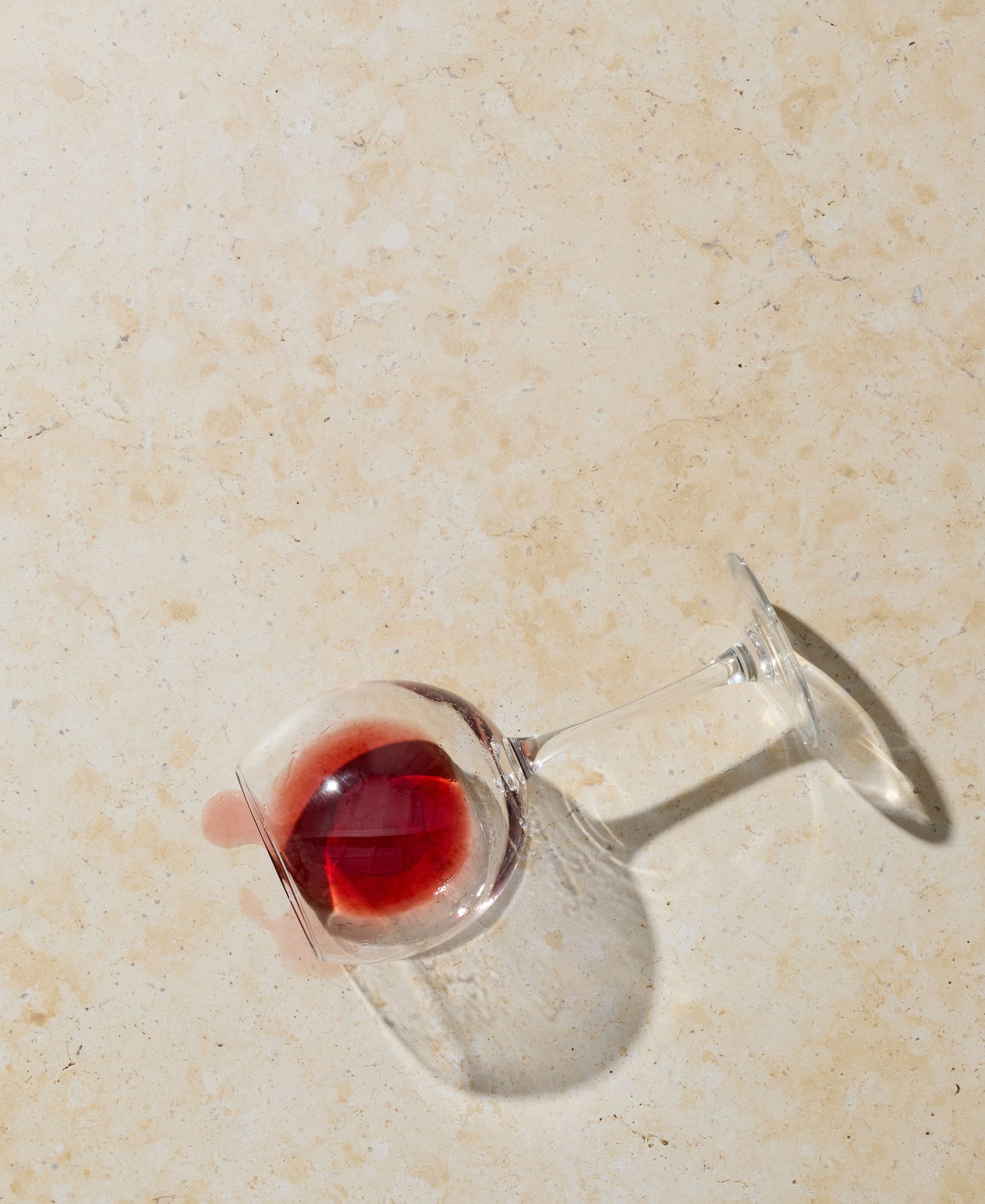
Top view of a fallen wine glass with red wine spilled on a light stone surface. Minimal composition with natural sunlight and shadows, creating an elegant yet accidental moment concept

Stone Protection Resources

Everything StainLock™ publishes about protecting marble, granite, quartzite, travertine, limestone, and other natural stone from acid etching and staining — in plain language, without marketing jargon.

Core Guides

Start here

These four guides answer the questions homeowners, designers, and fabricators ask most about protecting stone.

Glossary

Stone protection terms, defined

The vocabulary of stone care is genuinely confusing, and much of the confusion is created by marketing. Here are straight definitions.

Etching
Chemical damage to calcium-based stone caused by acid contact. It appears as a dull, cloudy, whitish, or grey mark where the surface has been dissolved at a microscopic level. Etching is not a stain and cannot be cleaned off. See etching on marble countertops.
Staining
Absorbed pigment or oil in the pores of stone. Staining shows as colour rather than dullness, and it can often be lightened with a poultice if addressed promptly. It is what conventional sealers are designed to slow.
Anti-etch sealer
A penetrating treatment that bonds within the stone at the molecular level to prevent acid etching and staining. Distinct from a traditional sealer in that it is permanent, invisible, and addresses etching as well as staining. See the anti-etch sealer guide.
Antietch
An alternate spelling of "anti-etch," used by some manufacturers and search queries. Antietch and anti-etch refer to the same category of permanent, etch-resistant stone protection.
Penetrating sealer
A conventional sealer that soaks into the pores of stone and lines them with a repellent material. Reduces staining, does not prevent etching, and must be reapplied every six to twenty-four months.
Topical sealer
A film-forming coating applied on top of stone, sometimes marketed as a polish or enhancer. It can block stains while intact but cannot stop etching, and it may peel, haze, dull, or trap moisture.
Patina
The natural softening, mottling, and surface variation stone develops with time and use. Patina is cumulative and generally considered character. Etch marks are distinct — they are localized chemical damage that reads as cloudy white rings or dull patches.
Matte (honed) vs. polished finishes
Matte and honed are the same finish — the terms are interchangeable, with "honed" more common in the stone trade and "matte" more common among homeowners. It has a soft, low-sheen surface with visible texture. It hides etching far better than a polished finish, because there is no gloss for a dull patch to interrupt — but it stains more visibly, since the open surface absorbs oils and pigments readily. Polished is the other main finish: reflective with crisp, mirror-like veining. It repels stains more effectively, but shows etching mercilessly, because every etch mark appears as a flat, cloudy spot where the shine has gone. Anti-etch and stainproof protection benefits both finishes, and leaves the surface exactly as it was — matte stays matte, polished stays polished.

Talk to a certified applicator

Reading is useful, but every countertop is different. A certified StainLock™ applicator will identify your stone, assess existing damage, and tell you honestly whether anti-etch protection is the right fit. The assessment is complimentary with no commitment.